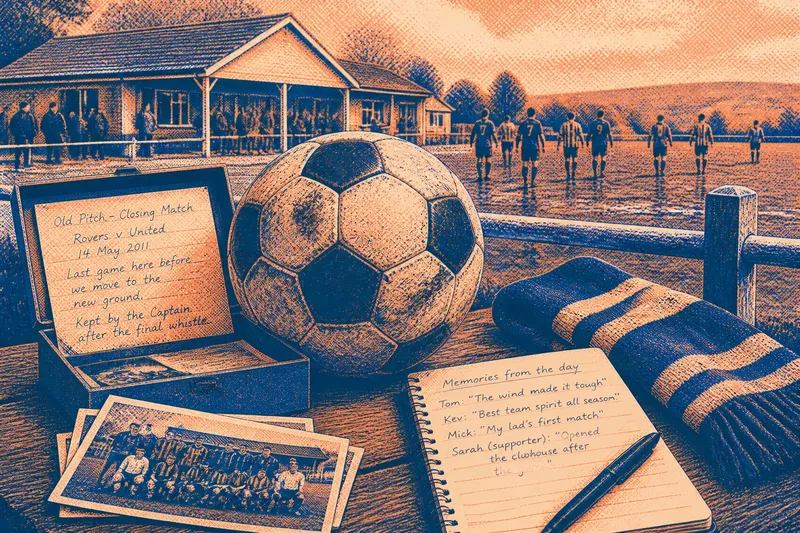
A First Visit to a Historic Sporting Ground
A first visit to a historic sporting ground feels less daunting when you notice how entrances, gathering places and changing layouts reveal layers of use.
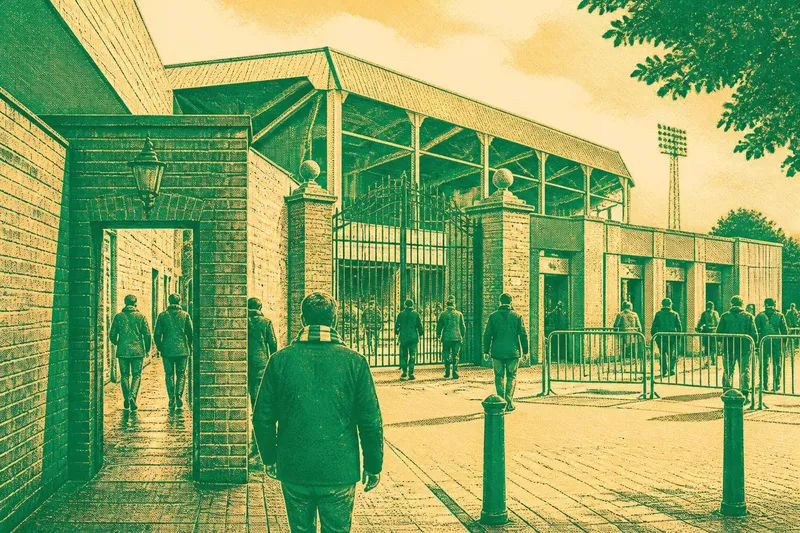
The common mistake on a first visit to a historic sporting ground is to look for one grand feature that explains the whole place. That can leave you rushing past the quieter clues: a turnstile beside a newer entrance, a broad landing where people gather, or a stand whose shape interrupts the view. The cost is not money but a thinner visit. A historic ground makes more sense when you treat it as a place used, adjusted and passed through, not as a single preserved picture.
A first visit to a historic sporting ground need not become a research project. You can simply notice where people enter, where they pause, and what the present layout seems to have made room for. Each clue offers a question, not a complete answer. The approach is low-pressure: look, compare, and let the venue keep some of its mysteries.
Start at the approach
Before reaching the gates, notice how the ground meets its surroundings. Is it set behind a broad forecourt, tucked among ordinary streets, or approached along a route that narrows towards the entrances? The edges can show how matchday movement has been accommodated, but they do not explain when or why a particular arrangement appeared.
Look, too, for changes in materials and scale. Brickwork may sit beside metal fencing; a broad entrance may be paired with a smaller doorway; old-looking stone may continue into a new-looking section. These differences are useful observations, not reliable dating tools. Repairs, later additions and deliberate design choices can all create contrasts that look like age.
Instead of guessing, keep the question modest: what does this route ask a visitor to do? A path that funnels people towards a central gate offers a different experience from several entrances spread along a street. Neither arrangement tells the ground’s full story. Both reveal something about how arrival feels now.
Read the entrance
Entrances are especially good places to notice layers of use. Look for turnstiles, signs, ticket gates, barriers and changes in paving. The useful detail may be a relationship between them: perhaps an older-looking passage sits beside a broad modern opening, or a familiar route appears to have been redirected around a newer structure.
Notice where people stop. A queue needs space; a group meeting a friend needs somewhere not to block the flow. A wall, railing or open patch of paving may shape that pause without being designed as a gathering place. On a busy day, follow the permitted route and leave accessways clear. Curiosity should never make another visitor’s arrival harder.
Imagine you arrive at a fictional ground called Brackenfield Park, where the main gate opens onto a paved forecourt. Beside it, a narrow brick passage leads towards one stand, while a newer-looking barrier directs most visitors across the open space. You might observe that the passage and forecourt offer contrasting ways into the venue. You could not conclude from that alone which came first, why the barrier was added, or who used the passage in earlier seasons.
Notice gathering places
A ground is not only a set of seats. Its shared spaces include concourses, landings, walkways and the corners where visitors meet before finding their places. These areas can show how people spend time around the event as well as how they move through it.
Ask what each space seems to support. A wide landing may let people orient themselves after climbing stairs. A sheltered corner may make a natural meeting point. A long corridor may connect distant parts of the venue while keeping the view of the field out of sight. Such impressions are about present use; a space can serve several purposes, and its intended role may have changed.
Pay attention to what a space leaves visible. From one concourse you may see the playing surface, while another offers a view of the surrounding roof or the backs of seats. A blocked view can be as telling as a clear one about the way sections relate, though it cannot by itself identify the reason for a change. Think of the venue like a well-used cupboard: added shelves can make a new arrangement obvious, but they do not tell you who first chose the layout.
Compare the layout
From a public walkway or your seat, look for shifts in height, direction and enclosure. Does one stand curve around the field while another sits at a sharper angle? Are rows interrupted by a broad aisle, or does a roof cover only part of the seating? These contrasts can make alterations visible without turning them into a timeline.
Choose one simple comparison and hold it lightly. You might compare how two stands frame the playing area, or notice whether one section feels more enclosed than another. Then ask what is plainly visible and what remains an assumption. “The roofline changes here” is an observation. “This section must be the oldest” is a claim that needs more evidence.
At Brackenfield Park, say you notice that the near stand has a straight roof edge while the far stand curves above the seats. You can record the contrast in a note or photograph from an allowed public spot. The expected result is a more attentive view of the ground’s present form, not a reliable account of which stand was built first. A venue’s official map, interpretation panel or staff member may help with factual questions, if that information is available.
What can a first visit tell you?
Should I try to identify the oldest stand?
Only if the venue provides reliable information to support the question. Visual age can mislead: a newer section may use traditional materials, and older fabric may have been repaired. On a first visit, comparing visible features is often more rewarding than naming a winner.
What should I photograph?
Choose details that help you remember relationships: an entrance beside a newer route, a gathering space opening towards a stand, or contrasting rooflines seen from an accessible public area. Follow venue rules, avoid photographing strangers closely without consent, and do not enter closed or restricted areas.
Can I learn anything without a guided tour?
Yes. A careful walk through public areas can reveal how arrival, movement and viewing fit together. A tour or venue guide is useful if you want confirmed dates, names or explanations rather than observations.
What if renovations hide older features?
That is still part of what the visit can show: the ground has been altered to serve its users. Notice where the current route differs from what the building’s edges suggest, but leave the reason open unless the venue supplies an account.
Keep a small field note
You do not need a formal notebook. A few plain prompts can help you remember what you saw without turning the visit into an inspection:
- Approach: Where did the public route begin to narrow or open out?
- Entrance: What kinds of gates, barriers or signs were visible together?
- Pause: Where did people naturally stop without blocking movement?
- Connection: Which walkway or landing linked one part of the ground to another?
- Contrast: Where did materials, rooflines or stand shapes noticeably change?
- Unanswered question: What would need a guide, map or official account to confirm?
These prompts keep observation separate from interpretation. If you write “the passage feels older than the entrance beside it”, you have captured an impression. If you write “the passage was the original entrance”, you have moved into a claim. That distinction makes your notes more useful when you later check a venue map or read its own account.
Leave with one question
For a first visit, one good question is enough to carry away: why do two routes into the same stand feel so different, or what might explain a sudden change in roofline? You do not need to solve it before leaving. A question gives the next visit a focus while preserving the pleasure of noticing things for yourself.
A first visit to a historic sporting ground is most satisfying when it leaves room for both certainty and doubt. You can be certain about the path you took, the places where people gathered and the contrasts visible from your seat. Keep causes and chronology open unless the venue can confirm them. If you return, look for whether the same routes and gathering places still shape the day; that simple comparison can make the ground’s changing life easier to see.