Why the Match Ball Becomes a Keepsake
Why the match ball becomes a keepsake: see how an ordinary piece of equipment gathers meaning, and how to preserve the occasion attached to it.
The most common mistake is to treat a match ball as memorable simply because it was used in an important game. That can leave the object with no clear story, and the details that made the occasion matter soon blur. A ball becomes a keepsake when people can connect it to a particular moment, place and set of people.
Why does a match ball become a keepsake?
A match ball becomes a keepsake when its role in an occasion gives it meaning beyond play. A decisive goal may be part of the story, but so might a first game, a farewell, a local final or the day a team came together after a difficult season.
The shift is often social rather than material. The same scuffed ball could be put away as surplus equipment, or kept because everyone remembers who carried it off the pitch and why. Its marks help, but they do not explain themselves: a scrape might come from a memorable tackle, an ordinary training session or a later game.
Think of the ball as a plain envelope. The paper matters less than the message inside; for a keepsake, the message is the occasion and the people who remember it.
Which match makes it matter?
The occasion need not be a famous fixture. A school final, a club’s first match at a new ground or a community tournament can mean more to those involved than a widely reported event. What matters is whether people can say why this particular ball was part of a day they still talk about.
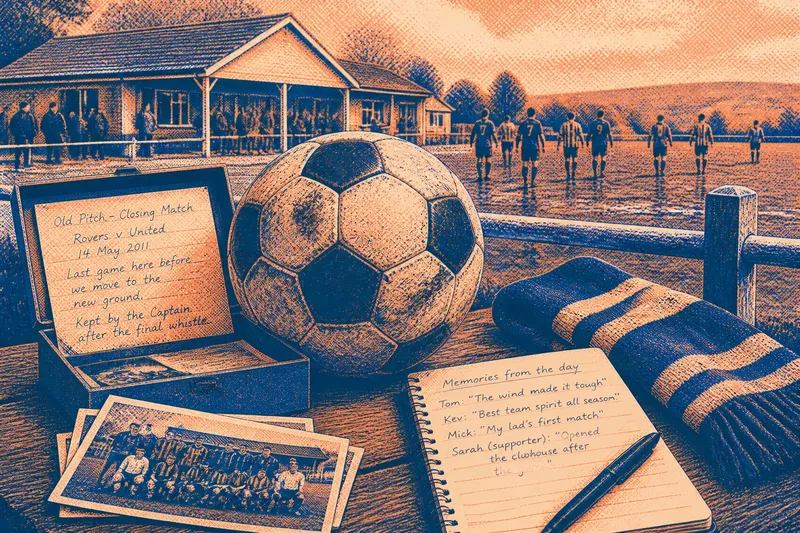
Sometimes one clear episode anchors the memory. Imagine a village side has just played its last match on a familiar pitch before moving to a shared ground. A player asks to keep the ball used that afternoon, and the captain writes the fixture and the reason for the move on a card stored with it. The expected result is that later visitors can connect the object to that specific goodbye, rather than guessing from its worn surface.
When no single play stands out, the occasion can still be remembered through its surrounding details: the opposing team, the weather, who opened the clubhouse, or who took the ball home. Choose the detail that people agree on, rather than decorating the story with uncertain claims.
Who gives it a story?
A ball’s meaning is usually shared. Players may remember the match itself; a coach may recall the preparation; a supporter may remember bringing a child to the ground. Each perspective adds context, but the keeper should make clear whose memory is being recorded.
Ask people who were there for one concrete detail each. A short note such as “held for the closing match on the old pitch; kept by the captain afterwards” gives a future reader a useful starting point. If accounts differ, preserve that difference: “Two players recall the final goal differently” is more honest than smoothing the disagreement into a single tidy version.
Ownership also shapes the story. The person who takes the ball home may not be the only person who feels attached to it. A club can record who holds it, where it is kept and whether it can be displayed, so the object remains part of the group’s memory rather than becoming an unexplained possession.
How should the story be recorded?
Record the ball’s identity and occasion while the details are fresh. A small card or digital record can include:
- The fixture, teams and ground, using the names people recognise.
- The date or season, if known.
- What made the occasion distinctive.
- Who kept the ball and who supplied the account.
- Any uncertainty, such as a disputed scorer or approximate date.
Keep the account brief enough to sit beside the object. A photograph can show the ball’s present condition; a separate image of the team or ground can help identify the setting. Label image files with the occasion and names, rather than relying on someone to recognise faces years later.
Do not write directly on a ball you hope to preserve. If signatures matter to the story, keep them as they are and record who signed, if that is known. For a club display or archive, check the maker’s care advice and any relevant local handling guidance before choosing materials or storage.
Will the ball’s condition affect its meaning?
Wear can make a ball feel tied to play, but condition is not a reliable measure of importance. A clean ball may have been used in a meaningful match; a battered one may have accumulated marks over many seasons. The accompanying account does the work that appearance cannot.
Should it stay inflated?
That depends on the ball’s construction and condition. Avoid changing its inflation just for display; consult the maker’s guidance if you need to decide how it should be stored.
Can it be displayed in a case?
A case can keep dust and curious hands away, while still allowing the object to be seen. Place the story card beside it, where visitors can read the connection without handling the ball.
What if the match details are uncertain?
Record what is known and mark what is remembered rather than confirmed. A note saying “believed to be from the cup final” keeps the lead without presenting it as fact.
When should it leave play?
A club may need its match balls for continued use, so keeping one should be a deliberate choice rather than an assumption. If a particular occasion has become significant, the club can agree to set that ball aside and record the decision. Another ball can then serve the team, while the selected one carries the story.
The right moment may come after a match, once the people involved have agreed what the ball represents. If memories are still changing, wait and record the object’s current role without forcing a grand claim. A modest description can gain depth as former players, families and supporters add details.
That is why the match ball becomes a keepsake: not because it is rare or untouched, but because its connection to a particular occasion is made clear and passed on. The most useful thing to keep beside it is not an elaborate display, but a careful account of who remembers the day and what made it theirs.